What to Write After You Meditate: A Simple Meditation Journal Method with Example Entries
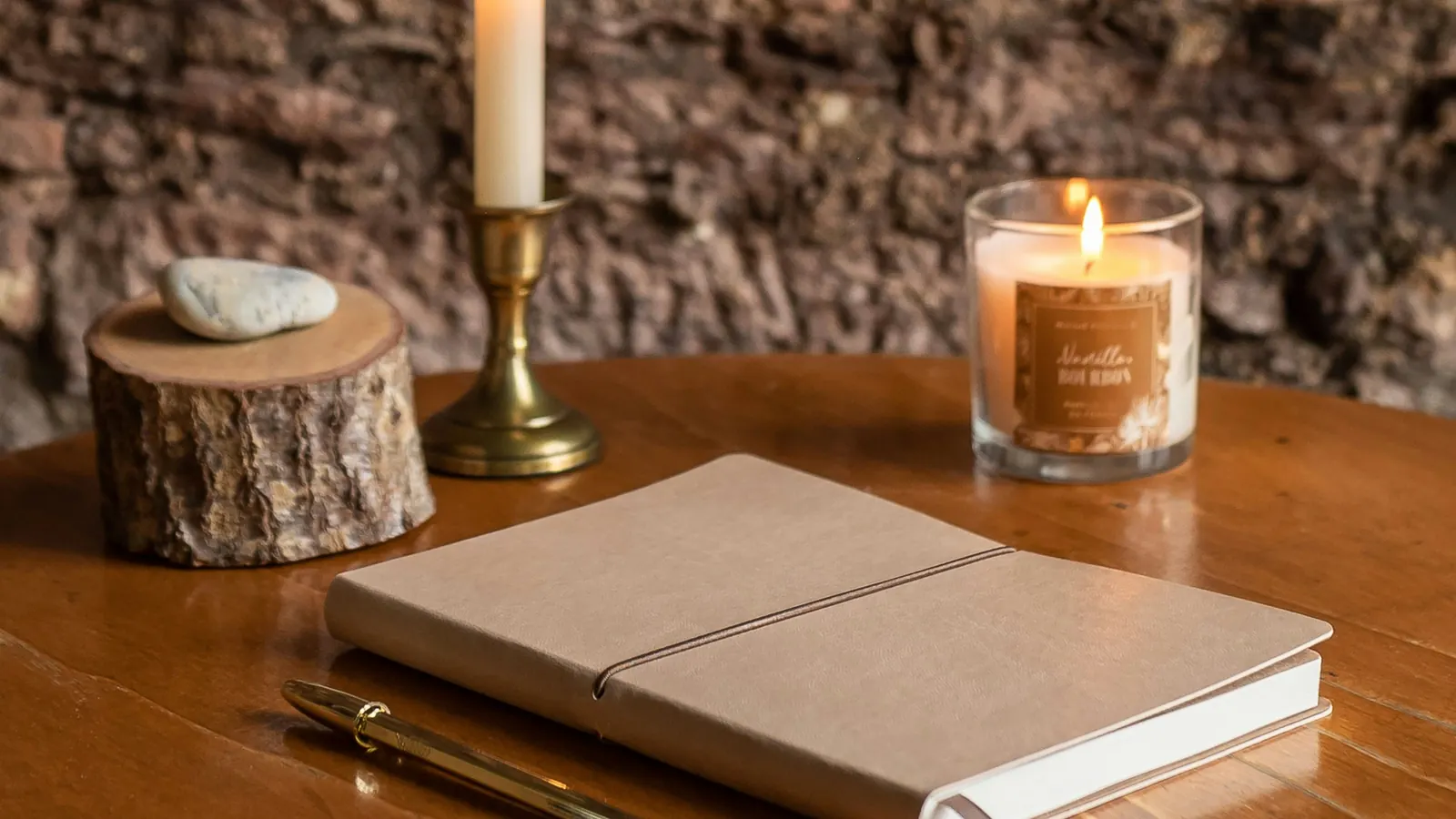
You finish a sit, open your eyes, and the day rushes back in. By lunch it is hard to remember what the session was like. A few lines in a notebook right after you sit can change that. You do not need to be a writer, and you do not need a long list of prompts. You need a short format you can repeat, and the habit of being honest with yourself.
Why write after meditation
The meditation teacher Jason Siff builds his whole approach around this step. After each sit, his students recall what happened and then write it down. He is clear that you will not remember everything, and that "only bits and pieces will be recollected, and that is enough."
Over weeks, those bits and pieces add up. When you read back, you start to notice the words you use again and again, the stories you tell about your sits, and the moments you could describe and the ones you could not. That is the real value of a meditation journal. It is less a diary and more a quiet record of how your practice is unfolding.
The method
Use the same four parts every time. It takes about five minutes.
- The basics. Date, time, how long you sat, and what you did. Breath counting, a mantra, sitting quietly, a walk. If you used your mala, note how many beads or rounds.
- What I remember. Start with whatever comes easily. Sounds, images, body sensations, thoughts, moods. Was the mind calm or restless? Did any emotion show up? Write it plainly.
- What pulled me away and how I came back. Name what took your attention, such as planning, a memory or an itch, and what helped you return.
- One line to carry. One small thing to try next time, or a single word for how the sit felt.
One rule makes the method work. Describe, do not grade. Skip "good sit" and "bad sit." A restless session written down honestly is just as useful as a calm one, and often more so.
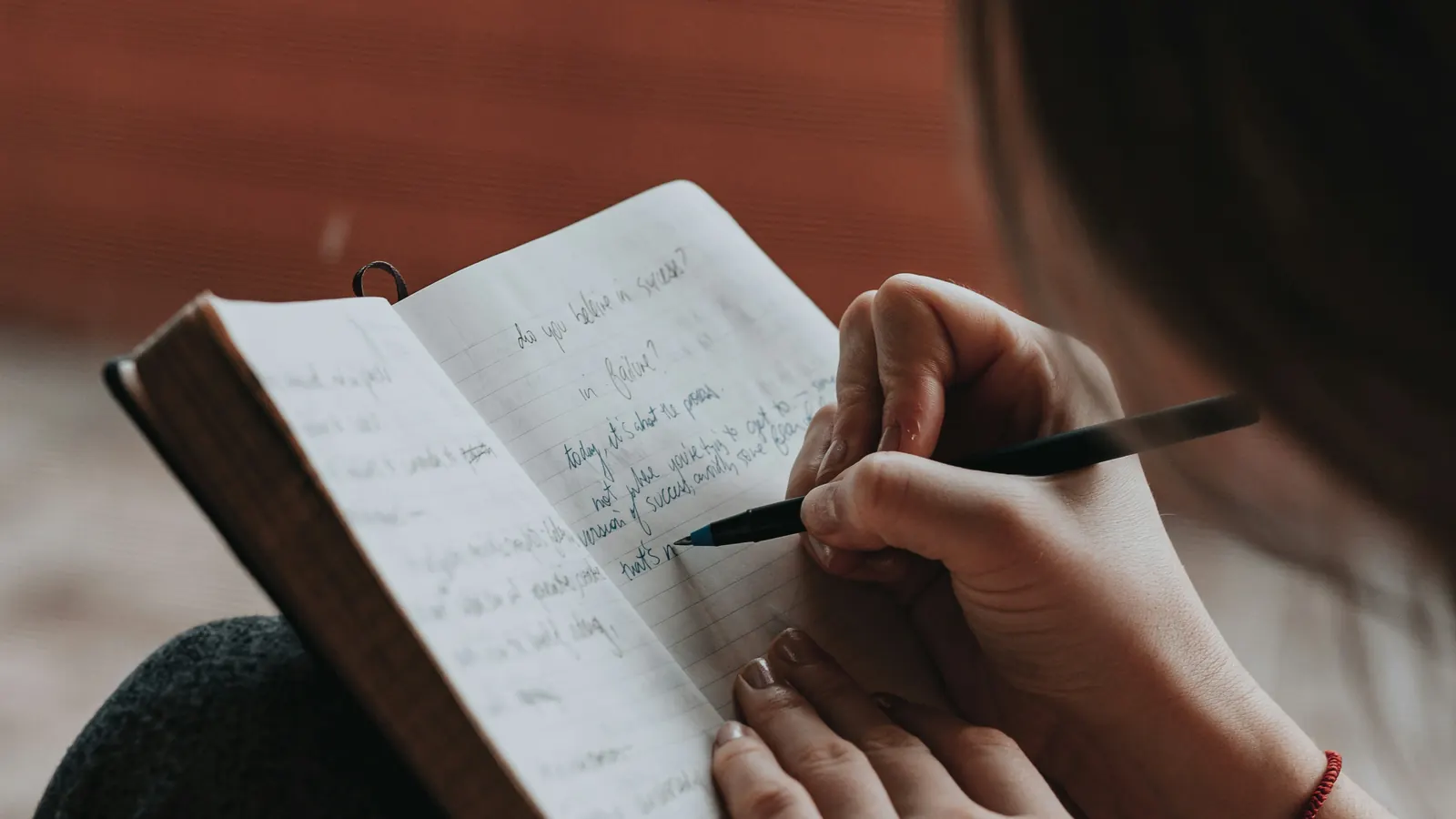
Example entries
These are made-up entries to show the format. Yours will sound like you.
Example 1
Tuesday, 7:10 a.m. Ten minutes, counting breaths on my mala. Got to about bead 60.
I remember the fridge humming, cold feet, and light coming in from the kitchen. Calm at the start, busier in the middle.
Kept drifting into planning the afternoon meeting. Feeling the next bead under my thumb brought me back most times.
Next time, sit before I check my phone.
Example 2
Thursday, 9:30 p.m. Fifteen minutes, one round of a mantra on my mala.
Sleepy at first. The words felt automatic for a while, then clearer near the end. A sad feeling about an old friend came up and passed. Shoulders tight the whole time.
Lost the words twice and caught myself just moving beads. Slowing down the beads helped.
Word for tonight, heavy.
Example 3
Saturday, 8:00 a.m. Five minutes, sitting quietly, no beads.
Short and restless. Birds outside, traffic, an itch on my nose I kept wanting to scratch. I did scratch it.
Mostly thinking about the weekend. Came back by feeling my feet on the floor.
Try ten minutes tomorrow, with the mala in my hand.
Notice what these entries do not do. They do not judge, explain or try to sound wise. They simply record what happened.
Reading back
Once a month, read your entries from start to finish. Look for patterns rather than progress. You might notice that morning sits are steadier than evening ones, that the same worry keeps returning, or that you always describe your mind with the same few words. Those patterns are often more helpful than any single sit.
Small habits that help
- Keep the notebook where you sit. If it is within reach, you will use it.
- Write within a few minutes. Details fade quickly once the day starts.
- Short is fine. Four lines count as a full entry.
- Use the same notebook. One place makes reading back easy.
- Skip a day without guilt. Pick it up again at your next sit.
A last word
A meditation journal does not have to be deep or beautiful. It only has to be honest and regular. If you want a simple practice to pair with it, start with Counting Breaths with Beads: A Five-Minute Practice for Beginners, and for the story behind the beads in your hand, read What Are Bodhi Beads? Their Meaning, History, and How People Use Them.
Sources
- Siff, J. (2014, December 22). Why recollect after a meditation sitting: Five essential reasons. Secular Buddhist Network. https://secularbuddhistnetwork.org/why-recollect-after-a-meditation-sitting/ (opens in a new tab)
- One Mind Dharma. Keeping a meditation journal. https://oneminddharma.com/keeping-meditation-journal/ (opens in a new tab)