What Are Bodhi Beads? Their Meaning, History, and How People Use Them
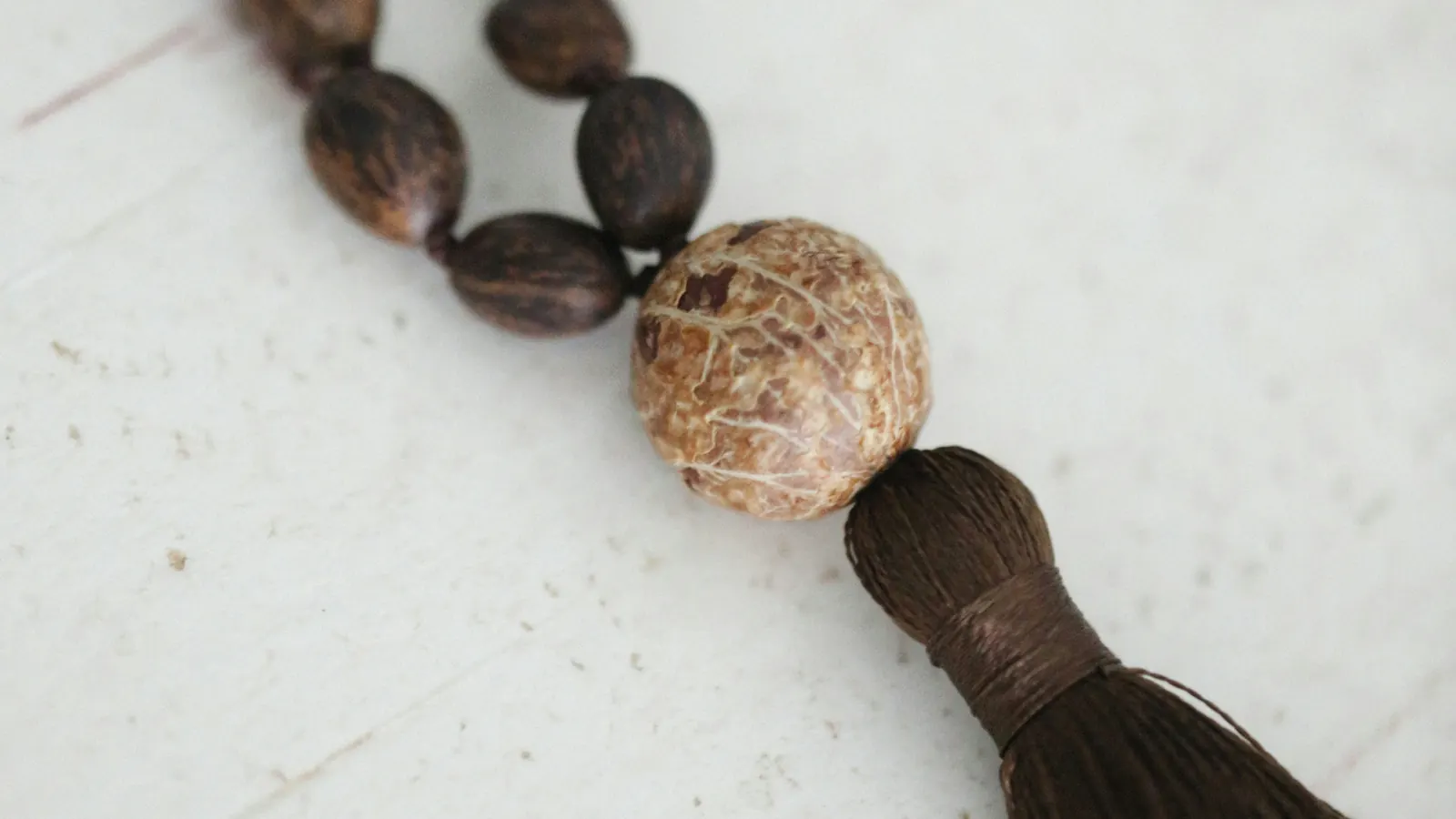
Bodhi beads are prayer beads, usually strung as a mala, that take their name from one of the most important trees in Buddhism. People count prayers and mantras on them, wear them, and keep them close as a reminder of their practice. Here is what the name means, what is known about where malas come from, and how people use them today. If you want to know what the beads themselves are made of, see Are Bodhi Beads Really From the Bodhi Tree? What They're Made Of and How to Tell What Yours Is.
What "bodhi" means
Bodhi is the word for the awakening, or enlightenment, that the Buddha reached. In Buddhist tradition, Siddhartha Gautama was sitting beneath a sacred fig at Bodh Gaya in India when it happened, and that tree became known as the bodhi tree, or bo tree. The Mahabodhi Temple at Bodh Gaya marks the place and is still a major site of pilgrimage.
A bodhi bead carries that name as a reminder of the Buddha's awakening and of the practice that leads toward it. The name honors the tree as a symbol. It does not usually mean the beads grew on it.
A garland for prayer
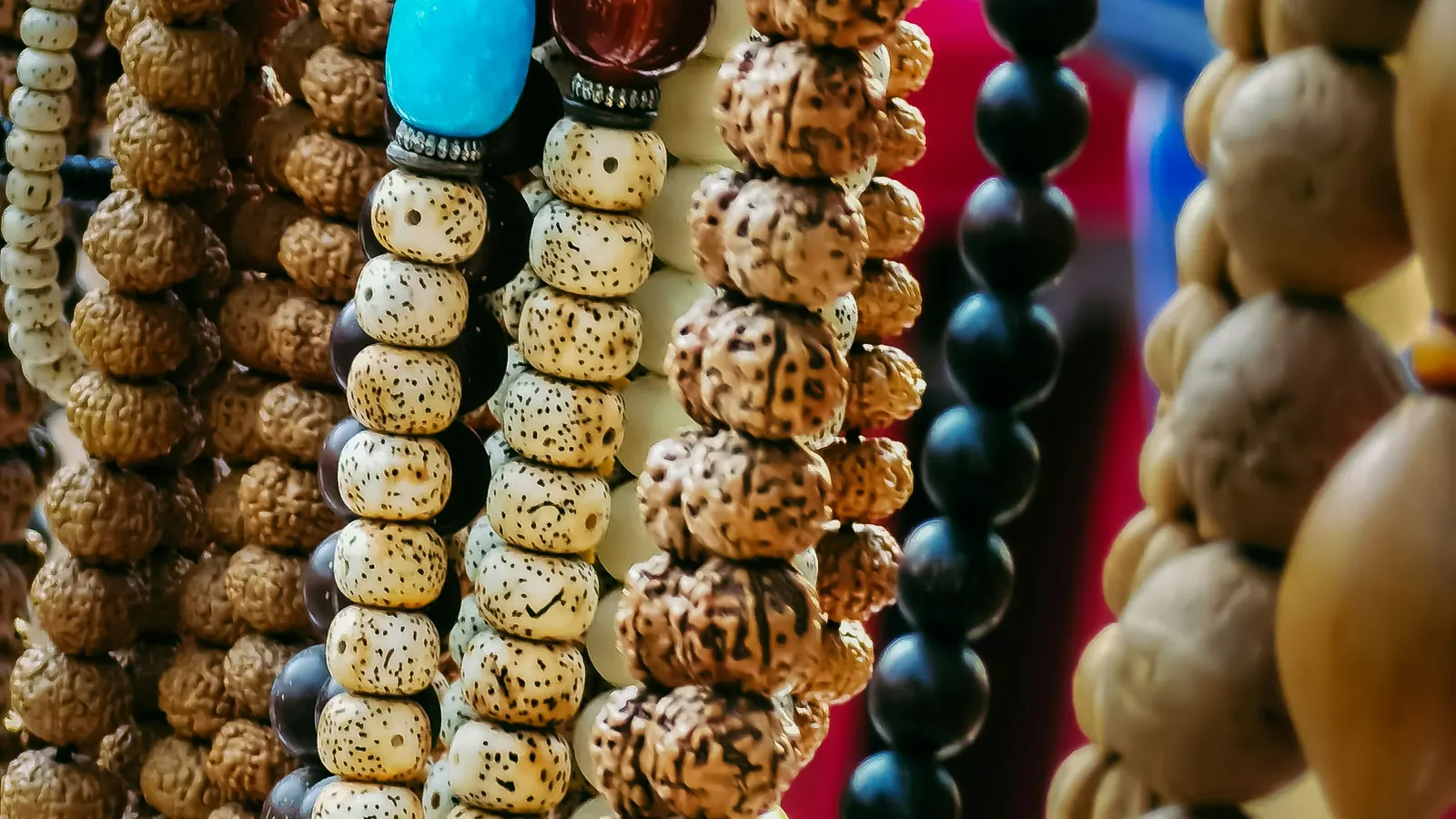
Mala is a Sanskrit word meaning garland. A japamala is a garland for japa, the repeated recitation of a mantra, a prayer or a sacred name. Malas made of seeds sold as "bodhi seed" are especially popular with Mahayana Buddhists. In Japan, Buddhist prayer beads are called juzu or nenju, and in China fozhu, which means "Buddha pearls."
Where malas come from
No one knows exactly who first strung beads for prayer. Counting with beads was common in many ancient cultures, and the mala is generally thought to have come from India. Britannica notes that Buddhist malas were likely adapted from Hindu practice.
Some of the clearest early evidence comes from China. The earliest known image of a mala held for recitation is a bodhisattva figure from the Northern Wei period, between the fourth and sixth centuries. The earliest known written reference to reciting mantras on a mala appears in a Mahayana scripture, the Mu Huanzi Jing, probably from the fourth or fifth century. Later, the monk Daochuo (562 to 645) became the first Chinese Buddhist writer to promote their use, and by the Ming dynasty malas were also prized as objects of beauty and status.
How a mala is put together
A full mala usually has 108 counting beads and one larger bead where the two ends meet. This is the guru bead, also called the mother bead or Buddha bead in some traditions and the sumeru in others. It is not counted. It marks the start and end of a round.
Shorter malas are common too, often with 54, 27, 21 or 18 beads. These are usually worn on the wrist or used to count prostrations. Some malas also have small marker beads that divide the strand into quarters, which helps with keeping your place.
Why 108? Traditions give different answers. Buddhist explanations include the 108 afflictions of the mind and lists of 108 phenomena, and some Tibetan teachers explain it as 100 recitations plus eight extra to make sure of proper concentration. No single reason is agreed on, but the number has stayed remarkably steady for centuries.
How people use bodhi beads
The most common use is counting. You say a mantra or prayer once for each bead, moving one bead at a time with your thumb. The beads keep count so your attention can stay on the words.
Details depend on the tradition:
- Which hand. In Tibetan Buddhist practice the mala is generally held in the left hand, draped over the index finger, with the thumb pulling each bead toward you. Many Hindu practitioners use the right hand.
- The guru bead. When you come back around to it, the custom in many traditions is to turn the mala and go back the way you came rather than pass over it, as a sign of respect for one's teachers.
- Other counting. Malas are also used to count prostrations, and to guide the breath during meditation. For a simple version of that, see Counting Breaths with Beads: A Five-Minute Practice for Beginners.
- Wearing. A long mala can be worn as a necklace or wrapped around the wrist when it is not in use.
- Care. The Tibetan Nuns Project suggests keeping a mala off the floor, taking it off before bathing, and removing it before sleep so the cord is not strained.
If you have a teacher, follow their instructions, since lineages differ on these details. If you do not, the simple version above is a respectful place to start. For more on using a mala well when you are new to these traditions, read Can You Use or Wear a Mala If You Are Not Buddhist or Hindu? A Respectful Guide.
A last word
A string of bodhi beads is a small object with a long history behind it. Its name points to the Buddha's awakening, its shape comes from centuries of practice, and its use is as simple as moving one bead at a time. To see how malas relate to the prayer beads of other faiths, read Mala, Rosary, Juzu and Misbaha: How Prayer Beads Compare Across Traditions.
Sources
- Encyclopaedia Britannica. Rosary. https://www.britannica.com/topic/rosary (opens in a new tab)
- Encyclopaedia Britannica. Bo tree. https://www.britannica.com/plant/Bo-tree (opens in a new tab)
- Tibetan Nuns Project. How to use a Tibetan mala. https://tnp.org/how-to-use-tibetan-mala-prayer-beads (opens in a new tab)
- Wikipedia. Japamala. https://en.wikipedia.org/wiki/Japamala (opens in a new tab)