Counting Breaths with Beads: A Five-Minute Practice for Beginners
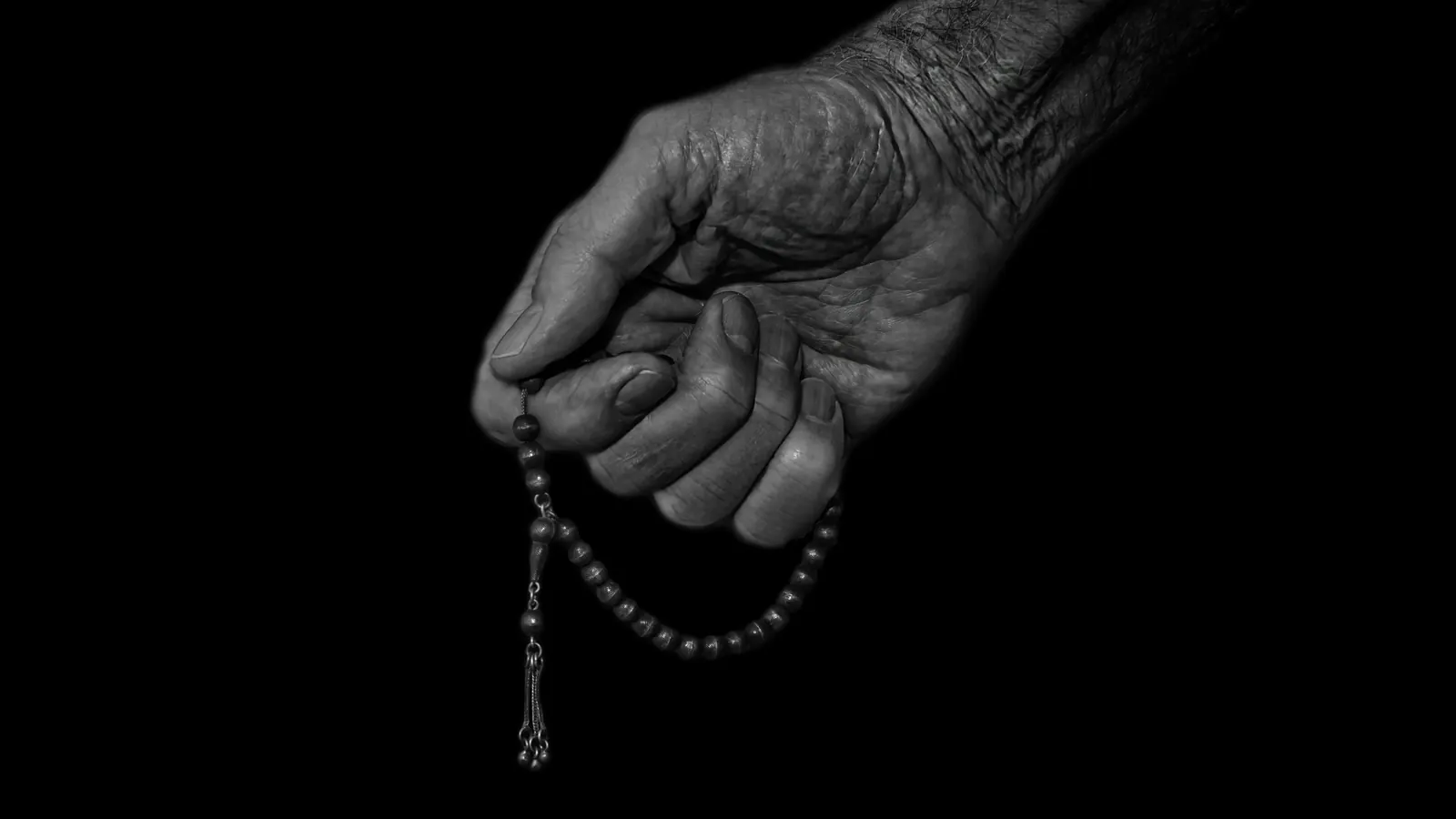
If you are new to meditation, a mala can make the first steps easier. Instead of trying to empty your mind, you give it one small job. Feel the breath, move a bead, and start again. This practice needs no mantra, no belief and no experience. All you need is your beads, a timer and five minutes.
Where breath counting comes from
Counting the breath is an old way of steadying attention in Buddhist meditation, and it is especially well known in Zen. In The Three Pillars of Zen, the teacher Yasutani Roshi describes counting breaths up to ten, then returning to one, and going back to one whenever you lose your place. Britannica notes that malas are also used to guide the breath during meditation.
Beads add something helpful to this. They turn the count into touch, so even when your thoughts wander, your hand still knows where you are.
Before you start
- Set a timer for five minutes. A gentle sound is best. Put your phone face down.
- Find a seat. A chair is fine. Sit upright but relaxed, with your feet on the floor.
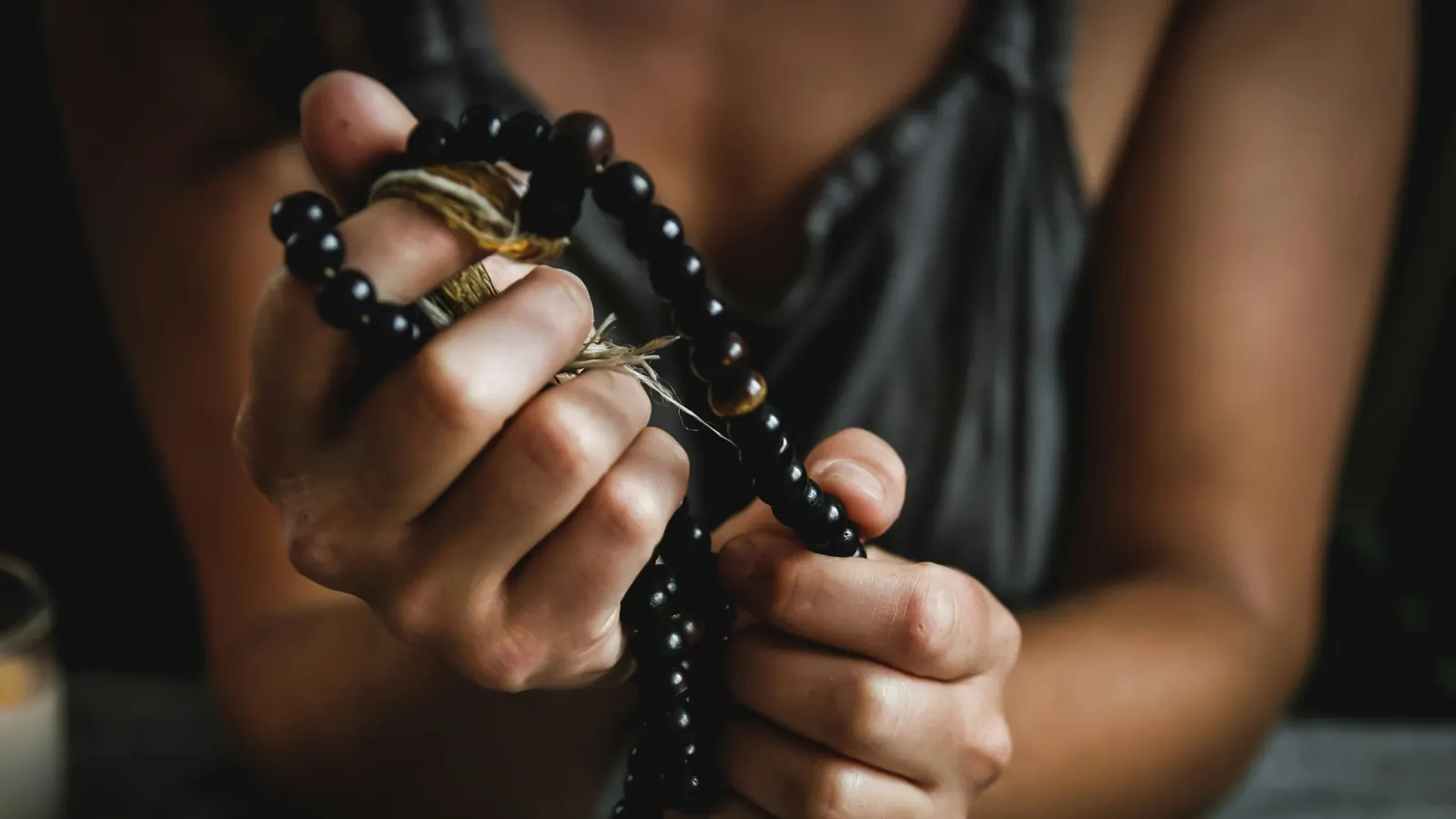
- Hold your mala. In Tibetan Buddhist practice the mala is usually held in the left hand, draped over the index finger, and moved with the thumb. Many Hindu practitioners use the right hand. For this practice, use the hand that feels natural.
- Find your starting point. Begin on the bead next to the guru bead, the larger bead where the strand meets.
The five-minute practice
- Settle. Take a few breaths without counting. Notice where you feel the breath most, maybe the nose, the chest or the belly.
- Move one bead for each breath. Let each in-breath and out-breath happen on its own. At the end of each out-breath, use your thumb to pull one bead toward you.
- Let the breath be ordinary. There is no need to breathe deeply or slowly. Just notice the breath you already have.
- When your mind wanders, come back. It will wander, often many times. When you notice, feel the bead under your thumb and continue with the next breath. That moment of noticing is the practice, not a mistake.
- If you reach the guru bead, turn the mala around and keep going the other way rather than passing over it, a custom of respect in many traditions.
- When the timer sounds, stop counting. Sit for a few breaths, then open your eyes and set your beads somewhere clean, off the floor.
Do not worry about how far you get. On a full mala of 108 beads you may not make it around once in five minutes, and that is fine. The number of beads is not the point.
A variation from Zen
Once the basic practice feels familiar, you can add a silent count. As you move each bead, count the breath in your head from one to ten. After ten, start again at one. If you lose track, simply go back to one.
Yasutani Roshi counts the in-breath and out-breath separately, so "one" on the in-breath and "two" on the out-breath. Counting one full breath per bead, as in the practice above, is a simpler place to begin. Choose one way and stay with it for the whole sit.
Common snags
- "My mind won't stop." That is normal. Each return to the bead is a repetition, like lifting a weight.
- "I lost my place on the beads." Just move on from wherever your thumb is. The beads are a guide, not a test.
- "I keep getting sleepy." Sit a little more upright, or keep your eyes slightly open and resting on the floor ahead of you.
- "My breathing feels forced." Stop trying to control it. If watching the breath feels uncomfortable, rest your attention on the feel of the beads instead.
- "Five minutes feels long." Start with three. A short sit you do often is better than a long one you avoid.
Building from here
Try to sit at the same time each day, even for five minutes. When five feels easy, move to ten. After each session, you might jot down a line or two about how it went. What to Write After You Meditate: A Simple Meditation Journal Method with Example Entries offers a simple format for that.
If you are new to malas and their meaning, What Are Bodhi Beads? Their Meaning, History, and How People Use Them explains where they come from, and Can You Use or Wear a Mala If You Are Not Buddhist or Hindu? A Respectful Guide covers how to use one with care.
A last word
Breath counting is about as simple as meditation gets, and beads make it simpler still. One breath, one bead, and a gentle return each time you drift. That is all there is to it, and it is enough to begin.
Sources
- Yasutani, H. (1995, Spring). Breathing. Excerpted from The Three Pillars of Zen by Philip Kapleau. Tricycle: The Buddhist Review. https://tricycle.org/?p=941 (opens in a new tab)
- Encyclopaedia Britannica. Rosary. https://www.britannica.com/topic/rosary (opens in a new tab)
- Tibetan Nuns Project. How to use a Tibetan mala. https://tnp.org/how-to-use-tibetan-mala-prayer-beads (opens in a new tab)